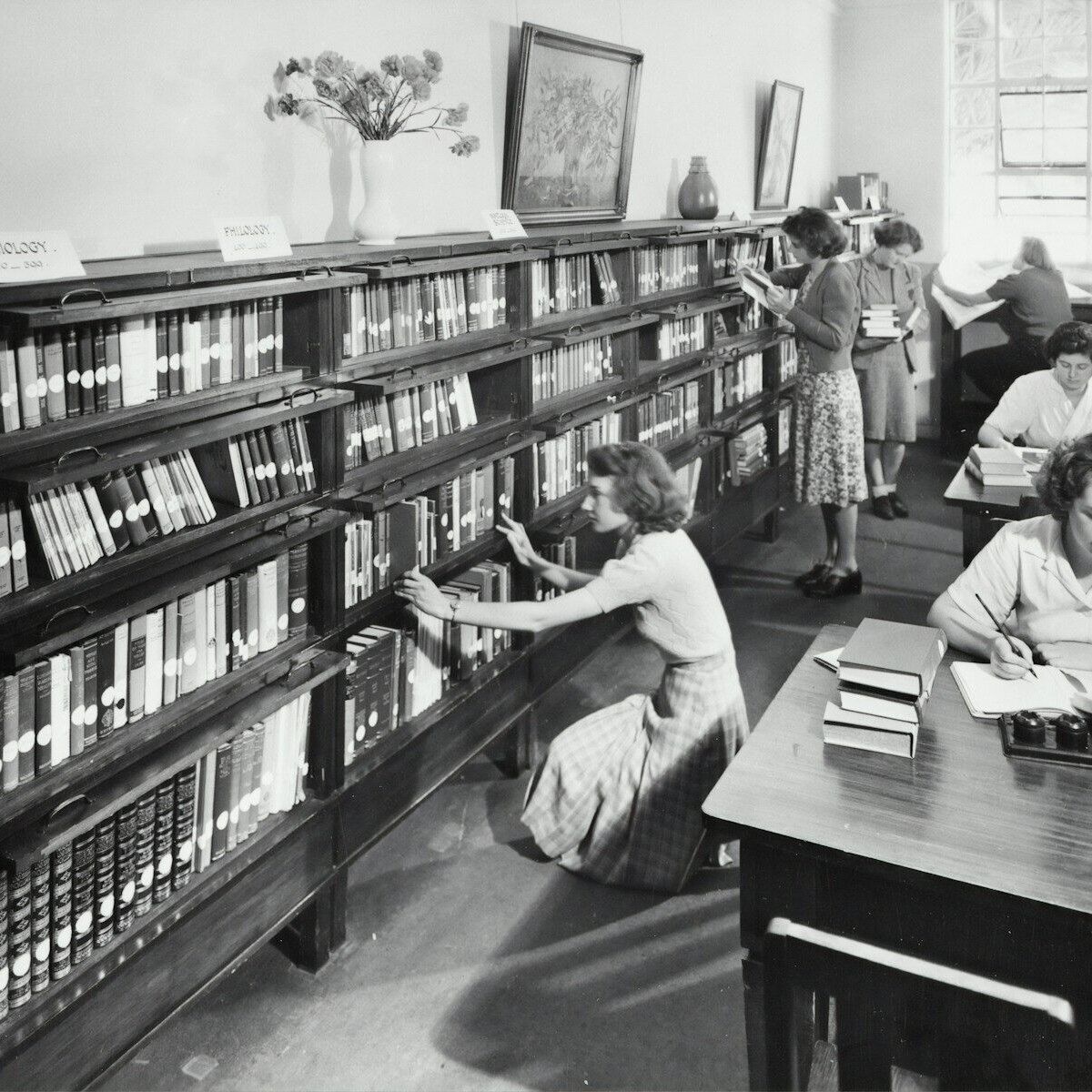



The story of the Canadian Association of Geographers (CAG) begins in a time when geography was still a developing discipline in Canada, with only a handful of scholars and institutions recognizing its importance.
Emerging from post-war efforts to strengthen national research and policy, a small group of dedicated geographers gathered in Ottawa in 1950 with a shared vision—to establish a unified organization that would advance the study and application of geography across the country.
Driven by the belief that geographic knowledge was essential to understanding Canada’s vast and complex landscape, these pioneers laid the foundation for what would become a national association. From its formal creation in 1951 at McGill University, the CAG aimed to promote collaboration, support research, and elevate the role of geography in education and public life.
Over the decades, the Association grew alongside the discipline itself—expanding from a small network of academics into a nationwide community of scholars, educators, and students. While it faced challenges in membership and evolving relevance, its contributions to research, education, and the development of geographic thought in Canada remain significant.
Today, the history of the CAG reflects not only the growth of an organization, but also the transformation of geography in Canada—from a niche field into a dynamic and evolving discipline that continues to shape how we understand our world.

History Timeline
Pre-Formation (1940s–1950)
1940s (World War II era)
- Hugh L. Keenleyside recognizes the importance of geography in government and international affairs
- He facilitates hiring of J. Lewis Robinson as one of the first professional geographers in the Canadian federal government.
1947
- Keenleyside becomes Deputy Minister of the Department of Mines and Resources.
- Establishes the Geographical Bureau with support from C. D. Howe.
- Bureau begins operations under Dr. Trevor Lloyd.
1950
- Bureau upgraded to Branch status.
- J. Wreford Watson appointed Director.
- Staff grows to 10 geographers → future founders of CAG.
Formation of CAG (1950–1951)
August 29, 1950
- 9 geographers meet in Ottawa (Elgin Building).
- Decision to create the Canadian Association of Geographers (CAG).
- Organizing committee formed (Watson, Gajda, Gutsell, Laurendeau, Nicholson, Reeds, Robinson, Tatham, Zaborski).
Late 1950 – Early 1951
- Outreach to geographers across Canada.
- Planning for inaugural national meeting.
May 30, 1951
- First official meeting held at McGill University.
- Formal establishment of CAG.
- Objectives defined:
- Promote geography in Canada
- Encourage research and education
- Facilitate collaboration
1951–1952 Executive Committee
- Honorary President: Griffith Taylor
- President: Donald F. Putnam
- Vice Presidents: Pierre Dagenais, J. Lewis Robinson
- Secretary-Treasurer: Pierre Camu
Early Development (1950s–1960s)
- Geography still emerging as a discipline in Canada.
Strong centers in Quebec:
- Université de Montréal
- Université Laval
- McGill University
1952
- First national meeting held at Université Laval.
1963
- CAG secretariat moves to McGill University (long-term base).
Formation of CAG (1950–1951)
August 29, 1950
- 9 geographers meet in Ottawa (Elgin Building).
- Decision to create the Canadian Association of Geographers (CAG).
- Organizing committee formed (Watson, Gajda, Gutsell, Laurendeau, Nicholson, Reeds, Robinson, Tatham, Zaborski).
Late 1950 – Early 1951
- Outreach to geographers across Canada.
- Planning for inaugural national meeting.
May 30, 1951
- First official meeting held at McGill University.
- Formal establishment of CAG.
- Objectives defined:
- Promote geography in Canada
- Encourage research and education
- Facilitate collaboration
1951–1952 Executive Committee
- Honorary President: Griffith Taylor
- President: Donald F. Putnam
- Vice Presidents: Pierre Dagenais, J. Lewis Robinson
- Secretary-Treasurer: Pierre Camu
Challenges & Criticism (1967–1980s)
1967
- Closure of the Geographical Branch (government setback).
Key criticisms of CAG:
- Failed initiatives:
- National wall map project
- Geographic excursions program
- Comprehensive bibliographyPolicy influence on national issues
Despite this:
- Growth continues in academic geography.
Publications & Achievements (1967–1990s)
Major publication success:
- Canada: A Geographical Interpretation (Centennial contribution)
1993–1997
- Launch of major academic series:
- Canadian Geography Series (4 volumes)
50th Anniversary Reflection (2001)
- CAG reaches 50 years.
Reflection by Audrey Kobayashi:
- Shift in geography:
- From discovering facts → to understanding knowledge as socially constructed
- Continued evolution of the discipline
Acknowledgements
The author has made liberal use of the essays collected in Hamelin, L-E., and L. Beauregard (1979) Rétrospective 1951-1976. The Canadian Association of Geographers Directory 2000 compiled and edited by Harun Rasid was also a useful source. And Volume 45, Number 1 (Apring 2001) of The Canadian Geographer should not be missed, especially the introduction by guest-editor and Association President Audrey Kobayashi, “Truly our own: Canadian geography 50 years after/Un symbole national: le Géographe canadien après 50 ans”.
The individual papers in this now-scarce volume are:
- “Objectifs de la réunion” par Louis-Edmond Hamelin
- “The development of the Canadian Association of Geographers 1951-1976” by J. Keith Fraser
- “Geography in Canada 25 years ago” by J. Lewis Robinson
- “On neoclassicism in economic geography theory” by Leslie J. King
- “Épistémologie de la géographie au Canada français” par Ludger Beauregard
- “Le géographe dans la société” par Pierre Camu
- “Geographers and Canadian society” by William Wonders
- “The CAG as seen by its members” by Herbert A. Whitney and Luc Bureau
- “Comments on the occasion of the 25th anniversary of the CAG” by Trevor Lloyd
- “Tableau de la géographie québécoise” par Louis Trotier